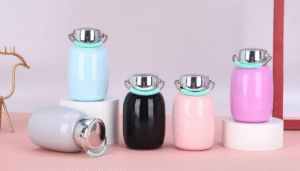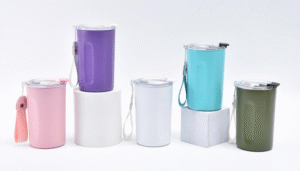
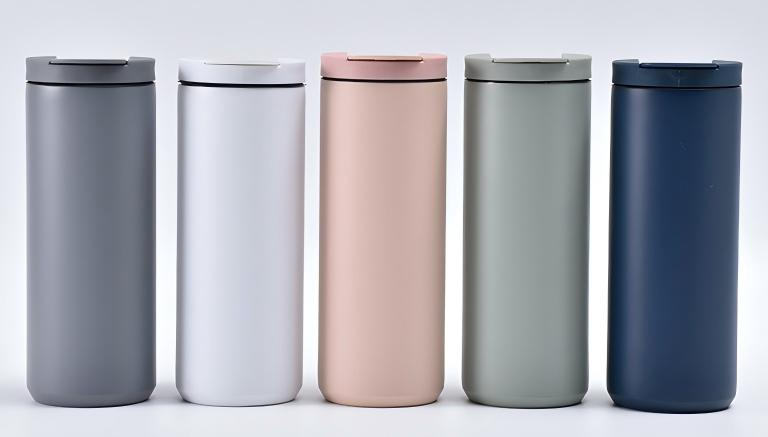
In daily life, thermos cups have become an indispensable personal item for us.
1. Two main manufacturing processes for the inner lining of insulated cups
The traditional welding inner liner adopts the process of segmented production and then welding. This process divides the inner container into multiple parts and shapes them separately, and then connects them into a complete container through welding technology. Although the welding process is precise, it is difficult to avoid leaving subtle welding marks on the surface of the inner liner. In contrast, the seamless inner liner adopts integrated molding technology. This process uses a single stainless steel plate, which is formed through multiple stamping and stretching processes. The entire inner liner has no seams or welding points, forming a complete container structure. From the perspective of manufacturing technology, seamless inner liners require higher production technology, advanced stamping equipment and precision molds, as well as higher process control standards. This is precisely the important reason why high-quality insulated cups often choose seamless technology.
2. Significant advantages of seamless inner liner
Excellent insulation performance due to the absence of welding seams, the seamless inner liner is physically more complete and uniform, effectively reducing heat loss through the seams. The welding seam area of traditional welded inner liners often has small changes in material thickness or density, which may become weak links for heat dissipation. Experimental data shows that under the same conditions, the insulation time of seamless inner liners is usually extended by 15% -20% compared to welded inner liners. This means that your hot drinks can maintain a longer temperature, whether it’s a sip of hot tea in the cold winter or a chilled drink in the summer, they can all achieve better temperature retention. Stronger durability and service life. Welding seams are the most vulnerable part of the inner liner. After long-term use, micro cracks may occur due to thermal expansion, contraction, or collision, affecting the insulation effect and even causing water leakage. The integrated structure of the seamless inner liner eliminates this weak link, making it more capable of withstanding collisions and temperature changes in daily use. Especially for users who frequently carry it out, the impact resistance of seamless inner liners is significantly better than that of welded inner liners, greatly extending the service life of insulated cups. Better health and safety protection: Welding seams are prone to accumulating scale and bacteria, which are difficult to completely remove during cleaning and may become a breeding ground for microorganisms. The smooth inner surface of the seamless inner liner has no dead corners, making it easier to thoroughly clean and ensuring drinking hygiene. It is worth noting that high-quality seamless inner liners are mostly made of 304 or 316 food grade stainless steel, ensuring that harmful substances will not precipitate and providing dual protection for drinking water safety.
3. How to distinguish high-quality seamless inner liner
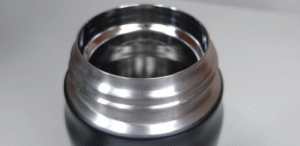
Observing the high-quality seamless bottom of the inner liner, the transition at the bottom of the liner is smooth and natural, without any seam marks. Consumers can touch the bottom of the inner liner and the connection between the side walls with their hands when making a purchase to feel if it is smooth and seamless. Check the smoothness of the inner wall. The inner wall of the high-quality seamless liner should be as smooth as a mirror, without obvious patterns or defects. This smooth surface is not only easy to clean, but also a direct reflection of the level of craftsmanship. Pay attention to material identification and identify the 304 or 316 stainless steel markings on the inner liner. Food grade stainless steel material combined with seamless technology can achieve the best results.
4. Suggestions for correct use and maintenanceEven high-quality seamless inner liners require proper use and maintenance. It is recommended to avoid storing acidic or high salt beverages for a long time, as these substances may corrode stainless steel. Clean promptly after use to prevent stains from depositing. When cleaning, choose a soft sponge or specialized cup brush, and avoid using hard brushes or abrasive cleaners to avoid scratching the surface of the inner container.