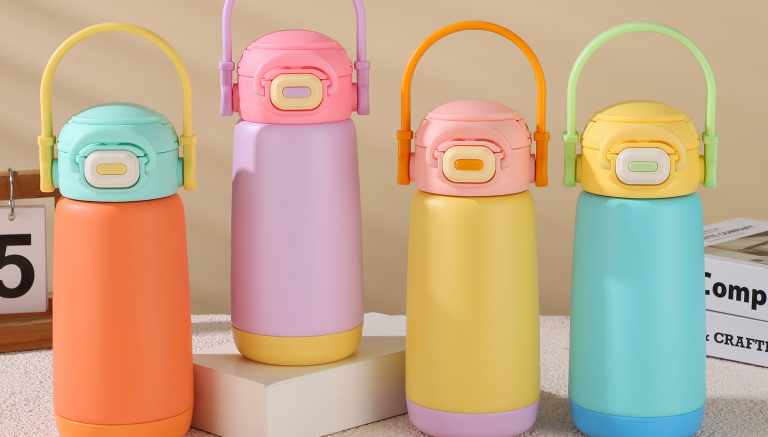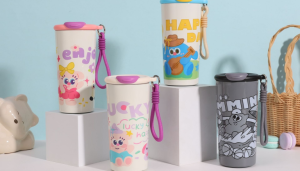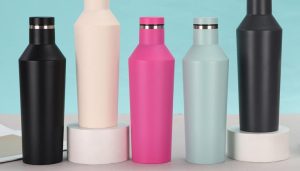
Improving the insulation performance of thermos cups involves three key points:
Vacuum clean
The interlayer gap is often made 5 millimeters, and the vacuum degree qualification line is ≤ 5 × 10 ⁻³ Pa. High quality products can achieve 10 ⁻⁴ Pa, while low-priced products may only have 10 ⁻² Pa, with a difference of a hundred times in residual gas. When vacuuming, follow the segmented curve and conduct a full inspection one by one.
Keep the seal sealed long enough
The penetration depth of laser welding should be controlled between 0.6 and 1.0 millimeters. If it is too shallow, there may be air leakage, while if it is too deep, it may crack later; By using tailless vacuum technology, the vacuum nozzle at the bottom of the cup can be eliminated. Many thermos cups only start to significantly cool down after six months of use, due to slight leaks that allow air to gradually flow back.
Thoroughly blocking radiation
Radiation typically accounts for 30-40% of total heat loss. After copper plating on the outer wall of the inner liner, the infrared reflectivity can reach about 97%, while that of bare stainless steel is about 60%, so it can actually increase by 8% to 12%.
In addition, there are two details that are prone to heat leakage: the flatness of the cup mouth is controlled within ± 0.02 millimeters, and the compression amount of the silicone ring is taken as 20% to 30% of the original thickness; The outer wall thickness should be ≥ 0.65 millimeters, as cheap models commonly use 0.30 millimeters. Once it is dropped and dented, it will cause the interlayer to fail.
The recommended acceptance criteria are: fill with water at 95 ℃, the water temperature should not be lower than 60 ℃ after 12 hours, and use infrared thermal imaging for full inspection.