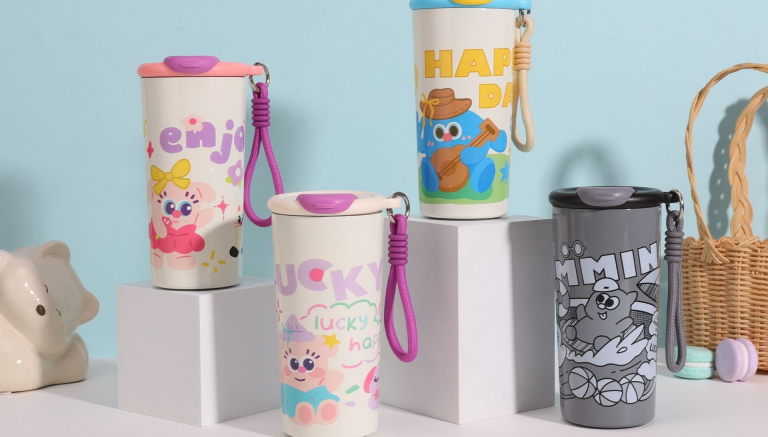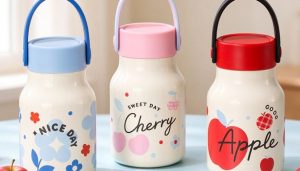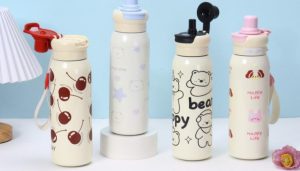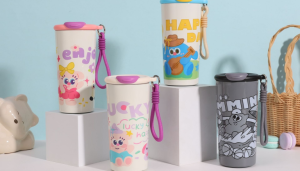
Straws are used every day, and the material cannot be taken lightly
Food grade liquid silicone: preferred, soft, bite resistant, high temperature resistant, good elasticity, not easy to crack, suitable for children;
PP straw: hard and durable, but prone to whitening and deformation if bitten for too long;
Do not choose inferior recycled soft rubber, as it may have a pungent plastic smell and may release harmful substances under long-term high temperatures.
Reminder: Try to choose detachable straw components. The straw, nozzle, and sealing ring can be disassembled and washed separately. Straws that are not detachable as a whole have many dead corners, and milk stains and juice residues are prone to mold.
Cup lid structure: leak proof and easy to clean are essential requirements
Most of the leakage in straw cups comes from the cup lid. Comparison of two mainstream structures:
One click pop-up straw model: One handed opening, convenient for commuting and travel, pay attention to the built-in leak proof valve, tightly closed and inverted without water leakage; The disadvantage is that there are many parts and gaps, which require frequent cleaning.
Spiral cap straw style: more stable sealing, less prone to accidental opening, suitable for storing in backpacks and backpacks;
Key points for avoiding pitfalls:
Do not buy cup lids with overly complex structures and densely packed small parts. Dead corners that cannot be washed are high-risk areas for mold. Priority should be given to cup lids with fewer parts and all parts that can be disassembled.