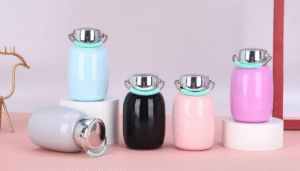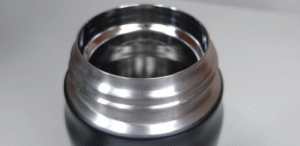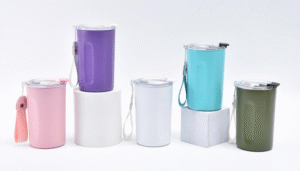
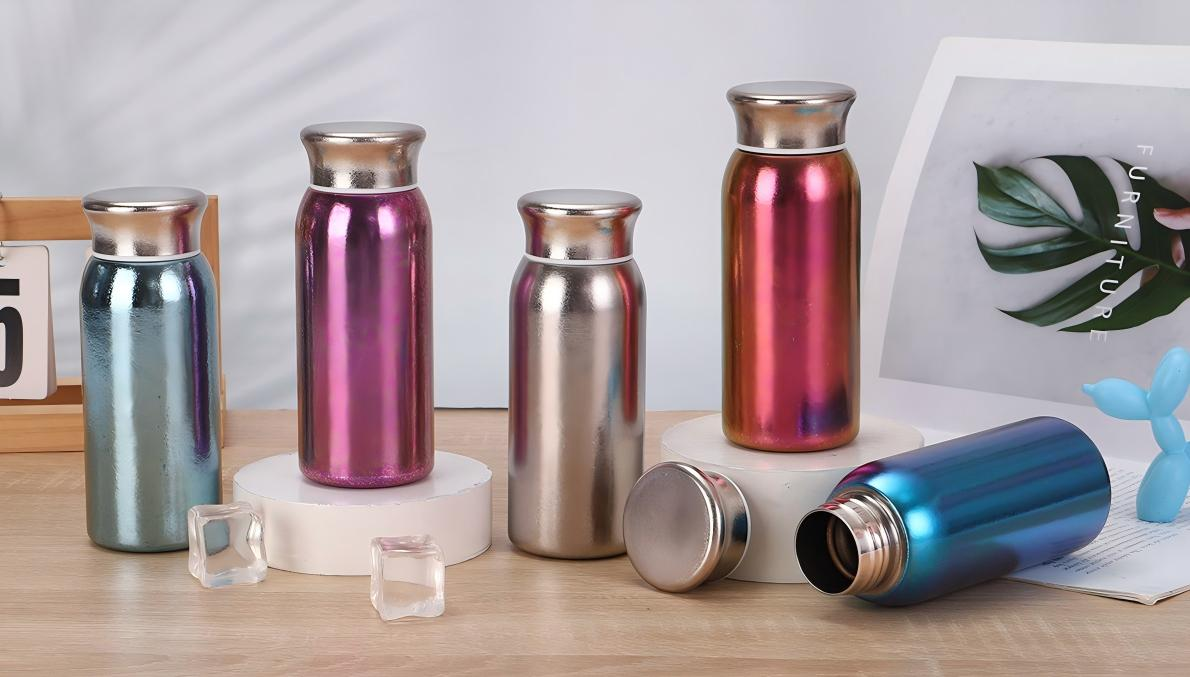
When we talk about healthy drinking water, besides the water quality itself, the safety of container materials is often overlooked. Which is healthier, pure titanium or 316 stainless steel cups?
1. Material characteristics
(1) Pure titanium
A 3-5 nanometer thick titanium oxide protective film will spontaneously form on the surface of pure titanium. This coating can repair scratches within 0.01 seconds, and even when immersed in a strong acid environment with pH 1.2 (such as gastric juice), the ion release is only 1/5000 of stainless steel. Moreover, the sensitization rate of titanium is only 0.6%, which is the core reason why it is widely used in medical implants such as dental implants and heart stents.
(2) 316 stainless steel
316 stainless steel contains 10-14% nickel and 16-18% chromium. Although it has passed the GB 4806.9-2023 food safety certification, it may release nickel ions in acidic environments. The EU safety threshold is 0.5 μ g/cm ²/week, and the release of 316 stainless steel in simulated gastric juice happens to be stuck at this critical point. What is even more alarming is that about 15% of the global population is allergic to nickel, and long-term exposure may cause skin redness, swelling, and respiratory discomfort.
2. Health comparison
(1) Invisible War of Metal Ion Release
After continuous immersion in boiling salt water for 168 hours, point corrosion appeared on the surface of 316 stainless steel, while the inner wall of the titanium cup remained as smooth as new. This is because the oxide film of titanium can resist chloride ion erosion, while the chromium oxide layer of stainless steel will gradually disintegrate in high temperature and high salt environments. If lemon water (pH ≈ 2.4) and carbonated beverages (pH ≈ 2.5) are stored in stainless steel cups for a long time, the risk of nickel ion precipitation will significantly increase.
(2) The ultimate test of biocompatibility
Animal experiments in the Journal of Biomaterials in 2023 showed that there was no inflammatory response in tissues implanted with titanium sheets after 12 months, while there was significant accumulation of metal ions around the stainless steel sheets. This difference is due to the fact that titanium ions can bind to human transferrin and be metabolized and excreted, while heavy metals such as nickel and chromium may deposit in the body. For sensitive populations such as chemotherapy patients and infants, the safety advantage of titanium cups is particularly prominent.
(3) The hardcore strength of antibacterial preservation
The stainless steel cup of soybean milk is rancid after 3 hours, while the titanium cup can keep the original flavor for 6 hours. This is due to the natural antibacterial properties of titanium – its surface charge can damage bacterial cell membranes, making it difficult for common pathogenic bacteria such as Escherichia coli and Staphylococcus aureus to survive. In addition, the inner wall of the titanium cup does not absorb odors and is not prone to scaling, completely bidding farewell to “cup brushing phobia”.
3. Scene adaptation
(1) Sensitive population
If you are allergic to nickel, undergoing treatment, or have weak immunity, pure titanium cups are the only option. Its’ 50 standard ‘(0 heavy metals, 0 scale, 0 glue, 0 paint, 0 coating) can minimize health risks to the greatest extent possible. Japanese sushi masters use titanium knives to cut raw fish slices precisely because they do not leave any metallic flavor, perfectly preserving the original taste of the ingredients.
(2) Daily use
For ordinary users, 316 stainless steel cups that comply with national standards are an economical choice. However, it should be noted to avoid storing acidic drinks for a long time and to regularly check the cup for scratches or corrosion. It is recommended to choose a product with a double-layer 316 stainless steel inner liner instead of a “pseudo high-end” design that only uses 316 on the outer layer.
(3) Outdoor Scene
The density of titanium is only 57% of stainless steel, and it is 43% lighter in weight under the same capacity. This is crucial for hiking and mountaineering enthusiasts – titanium cups can withstand extreme temperature differences of -20 ℃ to 120 ℃ while maintaining stability in high-pressure environments, and are even used in the manufacture of deep-sea probes.
4. Shopping Guide
(1) Look at the label: Pure titanium cups should be labeled with “TA1”, “TA2” or “99.9% pure titanium”, and 316 stainless steel should be clearly certified with “GB 4806.9-2023”.
(2) Magnetic testing: 316 stainless steel has weak magnetism, while titanium is non-magnetic (but it should be noted that some titanium alloys may contain other metals).(3) Details check: High quality titanium cups adopt integrated die-casting technology, with no gaps on the inner wall; Stainless steel cups need to be checked for tight seams to avoid the accumulation of dirt and grime.