1. Thermal insulation effect
The insulation effect of a thermos cup often depends on its vacuum degree and sealing performance. Generally speaking, the better the sealing of the thermos cup, the better the insulation effect. The factors that affect the sealing performance include the cup lid, inner liner, and outer shell.
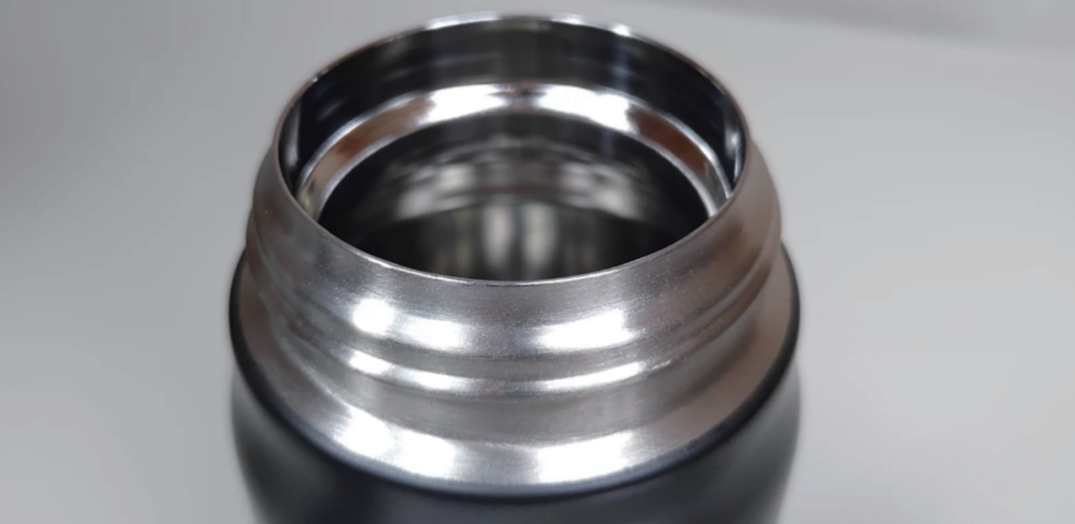
If the surface of the cup mouth is rough, it will not be able to connect well with the cup lid, resulting in air leakage from the insulated cup and affecting the insulation effect. Therefore, the cup mouth needs to be finely polished to remove burrs, sharp edges, or uneven parts, in order to ensure sealing performance, prevent moisture or air from penetrating, and affect the insulation effect.
The inner liner and outer shell are the main parts of the insulated cup, and the vacuum layer between them is the core technology of the insulated cup. If the material of the inner liner and outer shell is uneven, it will also affect the sealing performance of the insulated cup.
2. What causes uneven material distribution between the inner and outer shells of a thermos cup?
The inner and outer shells of thermos cups are mostly made of stainless steel, and the performance of stainless steel is affected by production processes such as heat treatment, polishing, welding, etc. During the process, polishing plays a crucial role.
Grinding and polishing are mainly applied to the inner and outer shells of insulated cups. Stainless steel material has good high temperature resistance and corrosion resistance, but after forming, there may be some defects on the surface, such as pits, scratches, oxide layers, etc. If ordinary or inappropriate sanding belts are used for polishing, it will damage the smoothness and passivation film of the insulation cup liner, accelerate the rate of water temperature drop, and greatly affect the insulation performance.The production and manufacturing of insulated cups not only require attention to insulation performance, but also to their aesthetic appeal and stain resistance, which are important indicators.